Blog #3: Microbiome

With trillions of coexisting bacteria, fungi, parasites, and viruses, the human microbiome is analogous to the busy streets of New York. Although the largest numbers of inhabitants live in the large and small intestine, the microbiome is also found throughout the body.  Every person has a unique microbiome that begins forming during their first exposure to microbes, at birth, and continues forming through outlets like breastmilk, before an infant has its adult microbiota at age 3. The organisms in one’s microbiome are directly influenced by where someone lives, what they eat and even who their parents are. A persons microbiome is responsible for things like stimulating the immune system, breaking down potentially toxic foods and synthesizing vitamins like B and K. 

However, that’s not all the microbiome can do. New research suggests ties between the microbiome and inflammatory bowel disease (IBD). IBD is a chronic immune-mediated disease affecting the gastrointestinal tract. Along with IBD, the gut microbiome may also be tied to obesity and type 2 diabetes. The 2 diseases are very closely tied and it is hard to determine independent relationships between each disease and the microbiome. However a research unit from Kiel University studied the microbiomes of of 633 lean, non-diabetics and 494 obese, non-diabetics, and 153 obese people in 2 German cohorts. Together, they concluded that “while obesity is associated with gut microbial variation, gut microbiomes associations with type 2 diabetes are modest.”

Research about the effects of the microbiome on disease and health are not extensive enough at this time. Since the gut microbiota is thought to control so many different aspects of life, more funding needs to be driven into research to explore the depths of its effects. I believe that with more time and effort, there are so many more possibilities to explore and more diseases that can be helped with manipulation of the microbiome. 

Blog #2 EC: The Novel Coronavirus

With the whole word in a panic over the newly discovered coronavirus, China, the  hub for the initial infection, has been taking extreme measures to prevent its spread. After receiving lash backs for not announcing warnings about the disease, the doctor, Li Wenliang, became a public icon of the Chinese government’s failing and a national hero. Dr. Wenliang began announcements about the virus in December but was silenced by police. He recently died Thursday after contracting the virus himself in Wuhan.  China has been following extremely strict quarantine procedures and even went as far as imposing penalties on social media platforms for releasing information after accusing them of “instating panic.” 

I think the penalties on social media platforms is taking it too far from the Chinese government. I understand that people may panic when hearing news but citizens also have a right to know about the risks in their country. Besides, the panic instilled in Chinese citizens resulted in the shortage of toilet paper, not uproar on the streets. Also the panic around the world for the coronavirus is a bit extreme given that the symptoms are cold symptoms and most people dying from the novel coronavirus already have other ailments. 

Prior to the outbreak of the new coronavirus, the Chinese economy was enduring great hardship due to the protests against the government. The outbreak has since worsened the Chinese economy especially in tourist areas which are now more vulnerable than during the violent protests. With tourism being considered one of the four pillars in their economy, China has entered a recession. All business and lives were effected by the outbreak of the virus. The Chinese government has suspended schools, universities and kindergartens are not open again until, at the earliest, March and most business are telling their faculty to work from home if possible. Locals brave enough to walk the streets are treating the coronavirus outbreak like 2002-2003 outbreak of SARS by wearing face masks and avoiding other people on the streets. 

Blog #2: Influenza

The influenza virus is an enveloped, single-stranded RNA virus with a segmented genome. The flu is spread by droplets suspended in the air as a result of coughing, sneezing or talking and infect another when these droplets land in the mouths or noses of those nearby. It can also spread by object vectors, meaning a person may touch an object with the virus on it and then touch their own mouth, nose or even eyes. Symptoms of influenza vary by person and even age but most commonly include muscle or body aches and fatigue. On average, between three and eleven percent of the US population get the flu every year.

The flu has an incubation period of between 1 and 4 days, allowing those who are unknowingly infected to spread the virus. According to the CDC, children are most likely to be infected with the flu while those over 65 are least likely. However, people at risk for developing serious complications resulting from infection by the influenza virus are those with any chronic medical condition (including asthma, heart disease and diabetes), those 65 and over, pregnant women, and young children. Complications resulting from infection such as pneumonia can be life-threatening and result in death.

The most important step to preventing flu is the vaccine. Flu vaccines are made every year by experts who attempt to predict the most common strand during the upcoming season. All vaccines are now “quadrivalent” meaning that protect against four different flu viruses. The effectiveness of vaccines vary by year. It is still early in the flu season to know how severe it will be. However, his year, the vaccine is not particularly effective against the strain rapidly spreading across the US and the current season began unusually early. 

Even if the vaccine is against the wrong strain, it comes down to, having some kind of protection against the flu is better than none so everyone should be vaccinated. I believe that unless there is some actual reason that prevents someone from getting the vaccine than they should be vaccinated. Especially because for one, they do NOT cause autism regardless of what the generally uneducated believe and two, those who get vaccinated can help those unable to be vaccinated through herd immunity. 

Blog #1 EC: The Novel Coronavirus

Coronavirus is a term used to classify a large family of viruses that have a wide range of illnesses. All viruses in the family are transmitted between animals and humans- zoonotic. They are enveloped viruses named for the crown-like spikes on their surface and most humans get infected with at least one coronavirus in their lifetime. Once in humans they spread through droplets in the air, direct contact, feces or by object vectors. Young children are most likely to get infected and face symptoms similar to the common cold including runny nose, headache, cough, sore throat and fever. 

The virus bringing so much terror to those around the world currently is the novel coronavirus. This strain has not been previously identified by humans.  This specific strain was believed to have began in China. Researchers recently analyzed 10 genome sequences from 9 patients who were sick in China and they found that the virus must have very recently made the jump from animals to humans because of their extremely similar genetic sequence. Because of this, we can determine that the virus was caught very quickly after its jump, but it is also spreading at a very rapid pace. There are over 6000 confirmed cases globally, almost all of which are in China. 

The first speculation as to where the new virus came from began with snakes. The most recent speculation from experts is that ultimately it was more likely to have came from a bat. Experts are not shocked by this assertion, with other diseases such as Marburg, Micah, and Hendra as well as thoughts that bats are the natural hosts of the Ebola virus, rabies, SARS and MERS. The Chinese CDC has said that data was pointing toward the virus beginning in bats, infecting another unknown wild animal and then moving on to humans. 

Blog #1: Andrew Wakefield

In 1998 Andrew Wakefield, a now discredited British physician and anti-vaccination advocate, published an extremely controversial- and now retracted- paper claiming there was a link between autism and vaccinations. He unethically gathered 12 children for his cohort, from his son’s birthday party by paying them five pounds each for a blood sample. Wakefield’s findings were largely based on parental recall and beliefs- not scientific evidence- making his study unable to be recreated and tested with to confirm his findings. His motives for producing such a statement were thought to have been the result of being funded by lawyers involved in lawsuits against vaccine manufacturers and looking for evidence to use against vaccine manufacturers. 

It wasn’t until 12 years after his initial release that the Lancet officially revoked the publication of the article due to ethical concerns. Clear evidence of falsification was found in every single case, varying from misrepresentation to undisclosed alteration. On top of falsifying documents and results the coauthors seemed to be completely unaware of his motives and operations under their licenses and reputations. His treatment of the children partaking in the study were also deemed unethical. Wakefield however, was not initially a poor scientist and doctor for early in his career he discovered that blockage of blood flow to the intestine was the cause of Crohn’s disease. However, he used the opportunity to study the link between autism and vaccines to push his own agenda, theorizing that the measles vaccine could cause inflammation in the intestines, allowing harmful proteins to make their way to the brain through “leaky gut syndrome.” 

Immediately after the false publication a public health scare hit with the uptake of vaccines dropping below 80%. 2019 hit the greatest number of cases seen for the measles since 1992. Since Andrew Wakefield’s publication and recent move to Texas, the rates for vaccination in Texas have gone down due to his continued advocation for anti-vaccination. In the decade after his move to Austin, the state capital, the rate of students who have opted out of at least one vaccine has doubled for “philosophical reasons.” 

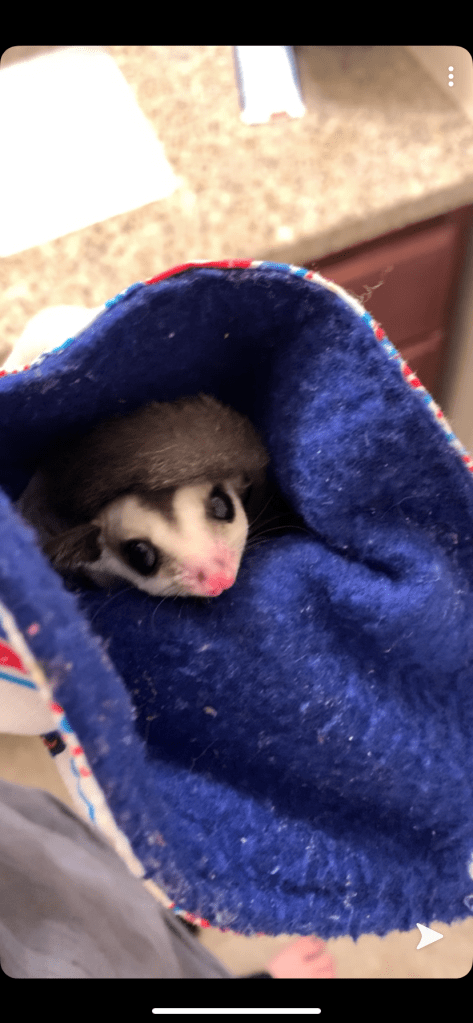
Odd adventures of Roo and Pip

To say that I have an affinity for odd animals might be an understatement if you really got to know me. My family has a variety of pets ranging from exotic to your average rescue dog. My latest investment into a pet (or two) keeps me up at night- literally. Roo and Pip are your average sugar gliders and my newest additions. Here are a couple of very cute pictures of my new babies.